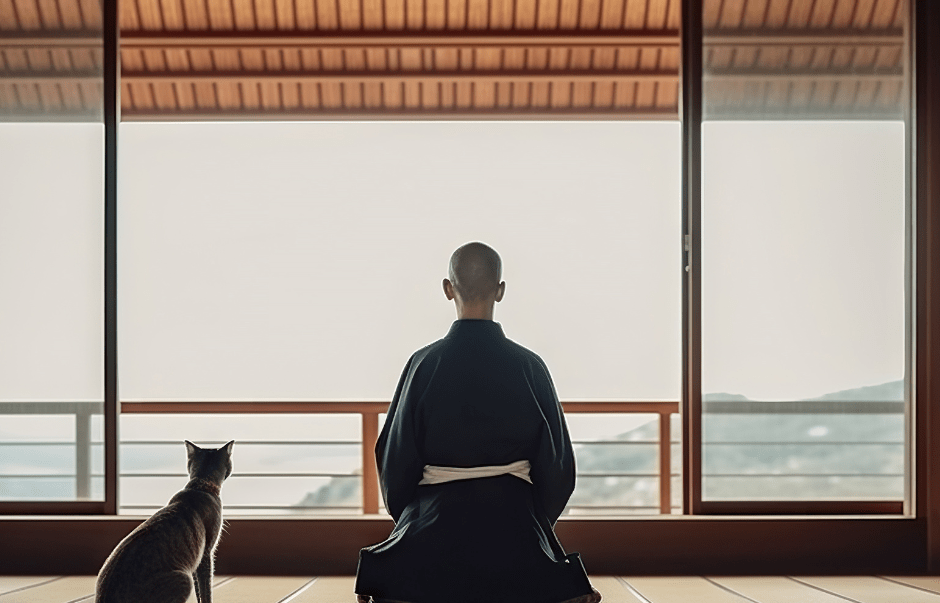
I spent a few days at a Zen temple in Kyoto. I wanted to see what it would be like to step out of normal life for a bit to slow down, maybe learn something about myself. Here’s how it went.
- What is Zen Monk Training?
- Why I Chose Zen Monk Training in Kyoto
- How Much Did the Training Cost?
- Daily Schedule
- The Rituals and Rules of Zen Training
- My Experience
- Summary
What is Zen Monk Training?
Zenshugyō (禅修行) or Zen training, is a form of Buddhist practice particularly emphasised in the Zen tradition of Japan.
For many, the word shugyō (spiritual training) conjures images of silent retreats, isolated temples and endless hours of meditation. But true zen practice is not found apart from daily life. It happens here and now.
Zen tradition is well-known for zazen (seated meditation) but the training extends far beyond formal sitting. At its core is the belief that real practice lies in facing whatever is right in front of us, regardless of how painful, tedious or mundane it may be. As long as we are alive, we all have to deal with responsibilities, unexpected challenges, illnesses and relationships with others. By meeting each of these moments fully, we give ourselves a chance to grow and transform.
In Zen, we are taught not to cling to the past or worry about the future. Even when difficulty arises, we are encouraged not to turn away but to meet it with the spirit of isshōkenmei. Japanese expression for a wholehearted devotion to the task at hand, doing it with all one’s might.
It considers that everything happening right now, right here is our greatest teacher and an opportunity for a profound lesson to be learned.
Every action from eating to cleaning is treated as part of the practice. You are required to focus your mind fully on each activity and give your best effort, no matter how trivial it may seem. The ultimate aim is to observe the inner self with stillness and to move toward enlightenment.
Why I Chose Zen Monk Training in Kyoto
As I was exploring different ways to meditate, I figured I should try zazen, especially since I’m Japanese. It was something I’d always wanted to experience, so while visiting my family, I thought, “why not use my time in Japan to reconnect with my roots?” Plus, I figured it would be good preparation for the Vipassana retreat I planed to do later.
How Much Did the Training Cost?
The course I attended cost 12,000 yen for three nights, with an additional 3,000 yen for each night after that.
Daily Schedule
The daily schedule was extremely simple and repetitive. You wake up early, sit in zazen (seated meditation), eat in silence, clean the temple grounds and repeat. You occasionally listen to the dhamma talk but there are no other special activities. Just the same routine, day after day.
Here is the timetable for my training.
| 5am | Morning wake-up gong |
| 5:40 am | Baduanjin qigong (traditional Chinese exercise) |
| 6:00 am | Meditation |
| 7:25 am | Breakfast |
| 7:45-9:00 am | Short break |
| 9:00 am | Morning prayer |
| 9:20 am | Housekeeping |
| 9:50-11:35 am | Morning chores |
| 11:45 am | Meditation |
| 12:00 pm | Lunch |
| 12:30 pm | Free time |
| 4:45 pm | Meditation |
| 5:00 pm | Dinner |
| 6:10 pm | Dhamma talk by the Abbot (Tuesdays only) |
| 6:45 pm | Reading aloud Buddhist scriptures |
| 8:40 pm | Tea break |
| 9:55 pm | Lights out |
The Rituals and Rules of Zen Training
If you don’t know already, Japanese people LOVE rules (and sticking to them). Turns out, our monasteries are no exception as I quickly found out during the training.
Here’s a list of all the rules I had to follow during my stay. Fair warning: it’s a long one so feel free to skip ahead to my actual experiences if you’d rather!
Rules Around Eating
In the Zen tradition, eating is not just a physical act but a spiritual practice. Every gesture, from unwrapping your bowls to cleaning them, is done with full awareness and gratitude.
Seated in Seiza
While eating, you are required to maintain seiza posture, the traditional kneeling seated position in Japan.
Chanting Gratitude Before the Meal
Once everyone is seated, you chant a short verse of gratitude. You have to read clearly and out loud in unison.
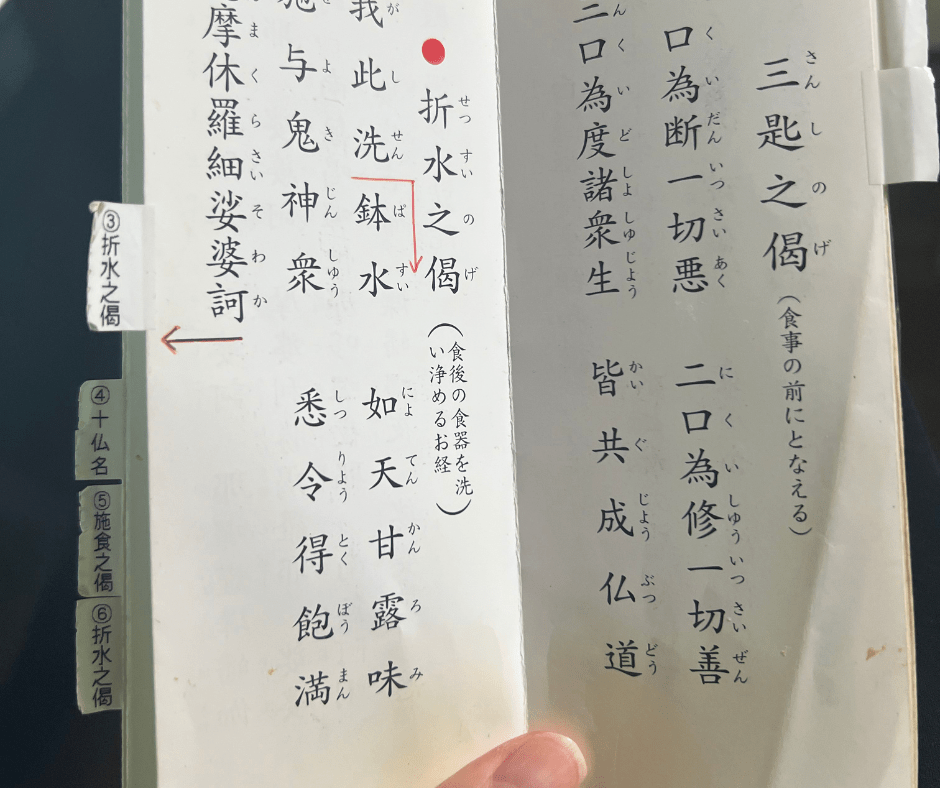
One of them is called, Sanshi no Ge (the Verse of Three Spoonful), which goes like this:
With the first bite, we vow to cut off all evil actions.
With the second bite, to practice all good deeds.
With the third bite, to save all living beings.
And together, may we all strive to awaken to the Buddha’s path.
It teaches us that every bite is a promise to do no harm, do good, care for all and be awakened together.
Setting Up the Three Bowls
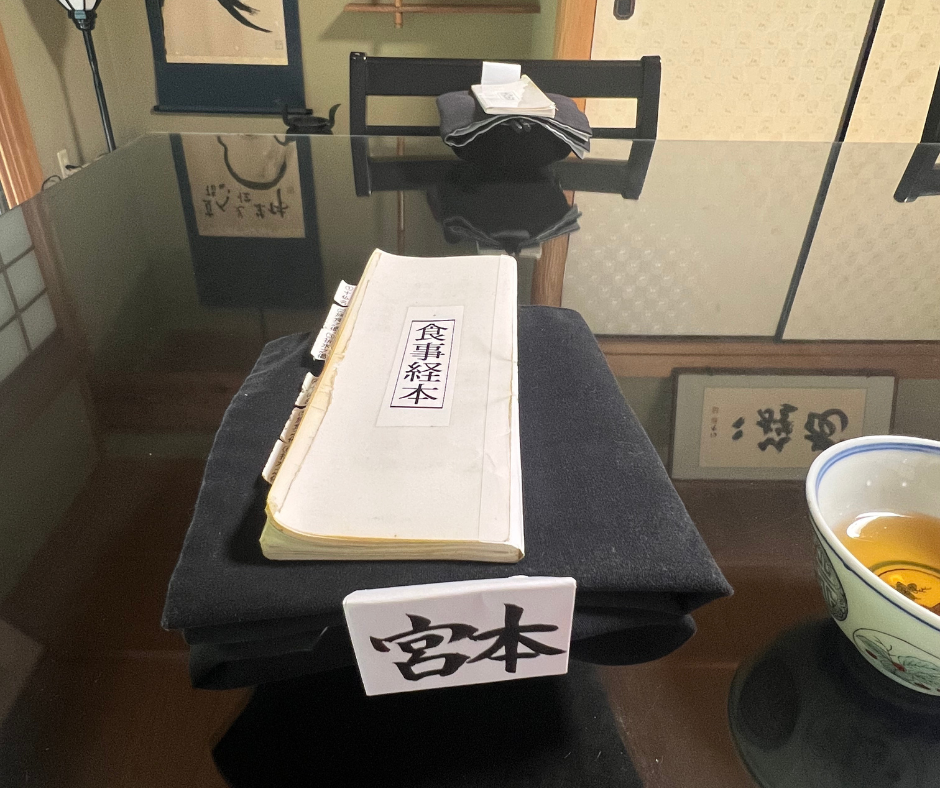
Each person will be given a set of three nested bowls, carefully wrapped in cloth. They are to be unwrapped and arranged in a precise order:
- The largest bowl for rice or porrige
- The medium bowl for side dishes
- The smallest bowl for pickles
When placing the bowls on the table, the left hand holds the bowl, while the right hand gently guides it down without making a sound. No clinking. No fumbling.
How to Receive Food
Food is served one person at a time. Until your turn comes, you sit silently, holding your chopsticks gently across your lap with both hands.
When it is your turn, you bow and receive the food using both hands to lift the bowl. You serve yourself only what you need, keeping in mind that there has to be enough for everyone. At the same time, everything prepared for that meal had to be finished. Nothing could go to waste. So if there are leftovers during the second serving, everyone needs to work together to clear the plates, even if you are already full.
Eating in Silence
Meals were eaten in complete silence. You aren’t just asked to refrain from speaking, even the sound of your chopsticks or bowls must be minimised. You were expected to eat quickly and quietly.
The Cleaning Ritual
You do not clean the bowls with soap and sponge here. Instead, you must clean with a slice of pickled radish and hot water!
Here’s how it goes:
- A pot of hot water is brought to the room, which is placed between you and a person sitting in front of you.
- You bow to each other. Then lift your largest bowl so the person seated in front of you can pour hot water into it. Swap the role afterwards.
- Take the smallest bowl (again, with both hands), which contains a pickled radish. Gently transfer the radish into the largest bowl.
- Using chopsticks, you use the radish like a sponge to scrub the inside of the bowl.
- The water and radish are then transferred to the medium bowl, then to the smallest bowl, repeating the process for each.
- Finally, you drink the rinse water, symbolizing respect for the food and a commitment to waste nothing.
The bowls were then dried with the cloth, stacked back carefully (and quietly!) and re-wrapped in the same cloth.

How to Practice Zazen
How to Enter the Hall
Sashu (Hand Position While Walking)
While walking in or out of the meditation hall, you must place your hands in sashu position.
- Lightly close your left hand into a fist, with the thumbs tucked inside.
- Cover it with your right hand.
- Rest your hands gently against your chest, elbows relaxed.
Entering Mindfully
- Enter from the left side of the doorway, stepping in with your left foot first.
- Once inside, stop and bow toward the altar in gasshō (placing palms together), with a slight lowering of the head (gasshō teitō).
- Return to sashu and quietly walk to your spot.
Before Taking a Seat on Your Spot
Stand facing your cushion and bow once in gasshō, acknowledging the practice space and those beside you.
How to Sit During Zazen
Leg Posture
Sit on your cushion (zafu) with your weight supported by both knees and your seat. You may choose:
- Half Lotus: Left foot on right thigh, right foot tucked underneath
- Full Lotus: Right foot on left thigh, then left foot on right thigh
Hand Position
- Place your right hand with your palm upward on your lap.
- Place your left hand on top of it, also with your palm upward.
- Lightly touch the tips of your thumbs together to form a gentle oval. This is called the cosmic mudra (Hokkai Jōin), a hand gesture used in meditation, particularly in Zen tradition.
Eyes and Gaze
- Keep your eyes naturally open
- Lower your gaze to the floor, about 1 meter (3 feet) ahead.
Breathing
- Breathe naturally through your nose, using deep abdominal breathing.
- Your breath should be quiet, steady, soft enough that even the person next to you can not hear it.
- Let your breath become your anchor. When thoughts arise, return to the breath.
How Meditation Begins
The start of zazen is marked by chimes of a bell. Once it rings, maintain complete stillness. You cannot leave the hall during the session.
Receiving the Keisaku (Encouragement Stick)
The keisaku is a flat wooden stick used during meditation to help restore alertness. If you feel drowsy or your mind struggles to focus, you can signal the abbot for a mindful tap.
Here’s how:
- As the abbot approaches, place your hands in gasshō to request the keisaku.
- Once he faces you, bow and lean slightly forward.
- You’ll receive two firm taps on each shoulder.
Afterward, bow again in gasshō and return to sitting posture.
How It Ends
The end of zazen is signaled by a bell chime. Upon hearing it, stand in sashu and swiftly exit the hall. You are not allowed to stretch inside the hall. You must stand swiftly and keep walking towards the exit, even if your legs are numb!
My Experience
Day 1 Arriving at the Temple
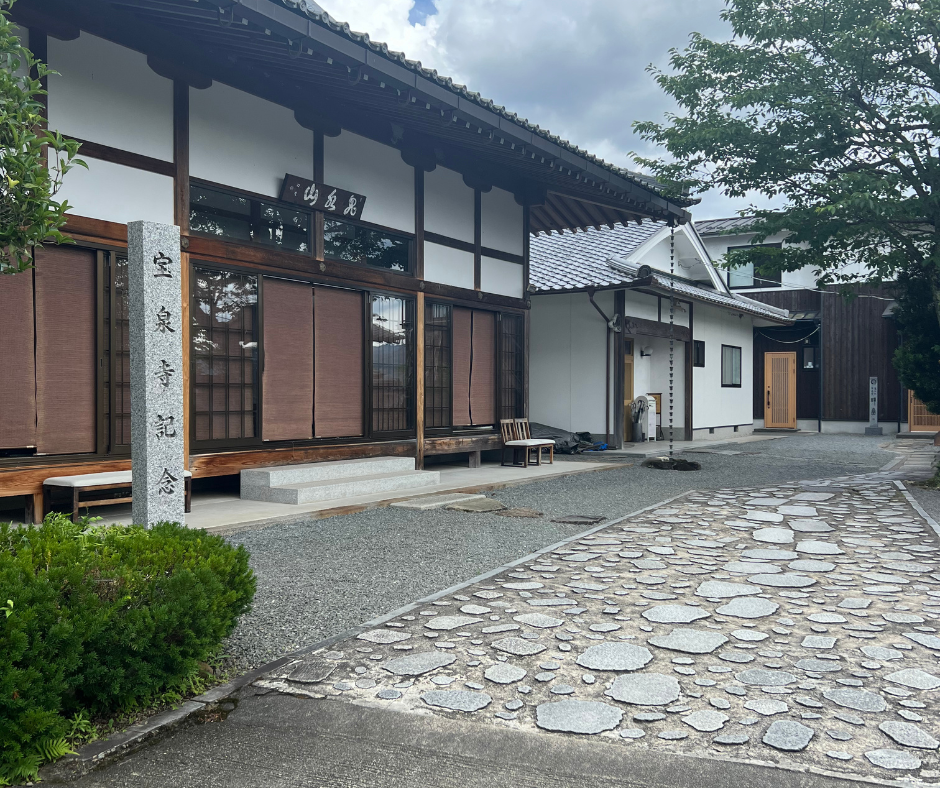
I got off at the nearest station and walked up a gentle hill to the temple. It was hot but a peaceful walk overlooking rice farms. I arrived just before 3pm and was the first one there.
At the entrance, I spoke to a staff member (not a monk, he had hair!) who guided me into a waiting room with glorious air conditioning. I filled out the registration form as requested. The form also came in English and I wondered if there was any trainee from overseas.
Each seat had a name tag so I found mine and sat down. It turned out three other people were also arriving that day. Everyone seemed a little nervous. We barely talked to each other.
At 4 pm, a resident staff (called Jōjū-san) gave us a quick tour of the facilities. It was so fast we were taken from room to room before I could properly take anything in.
Back in the reception room, we watched videos explaining meal etiquette and how to sit in zazen (seated meditation). They only let us watch them twice and after that we would be expected to do it for real.
Then we moved to the meditation hall. Old participants were already sitting on their cushions. Each newcomer introduced themselves with their name and where they were from, then we were led to our own cushions.
About 15 minutes later, a bell rang and we all stood up to head downstairs for dinner. The more experienced participants sat across from us beginners so we could copy them.
Seriously, it was the most nerve-racking dinner of my life! We all ate in complete silence, with staff watching us closely the whole time. Make one mistake, they would correct you immediately. Every small mistake, from a chopstick hitting the bowl to lifting it with one hand, was called out without hesitation.
And we had to finish everything in about 10 minutes. It was stressful but also strangely eye-opening to see how much care and precision they put into such an ordinary act.
By the end of it all, I was so overwhelmed that I just took a shower and crashed into bed. That night was boiling hot and I could not fall asleep. Turns out there should have been a fan in the room but mine didn’t have one. I lay there sweating and wondered, “Is this part of the training too?”

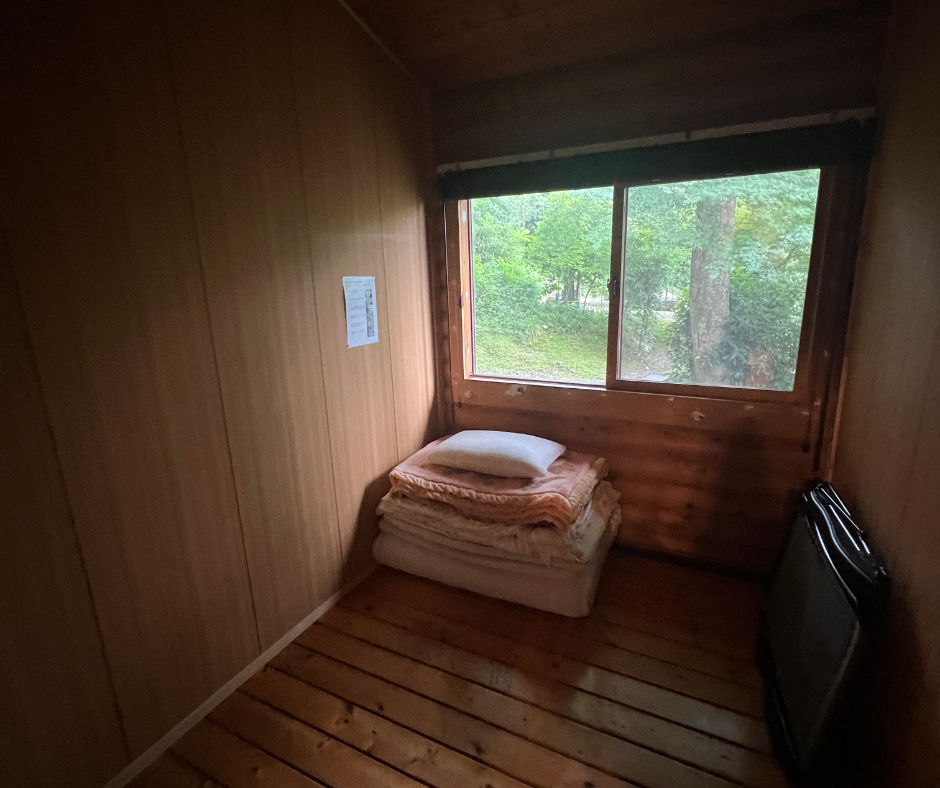


Day 2: From Aspiring Monk to High-Maintenance Patient
At breakfast, I tried not to eat too much because I was so nervous I could barely swallow. Luckily the person across from me was incredibly kind. He slowed down his movements so I could copy them and not panic about messing up the rituals (and being called out by the staff!)
After that, we did Ba Duan Jin, a traditional Chinese set of qigong exercises. It was my favorite activity of the day. I loved this genuine meditative time for my mind and body.
After that was a short break, then morning chanting. At the end, we got assigned cleaning spots. Mine was the entrance hall and bathrooms.
Then it was time for communal work (samu). I was assigned to do weeding in the garden. At first, it was actually kind of fun. I was chatting with the girl next to me while we worked. But pretty quickly, the staff came over and firmly reminded us that samu is a practice of being fully present with the task in front of you. Talking was not allowed.
They also told us we couldn’t sit down to weed. Instead, we had to squat. After a while my legs were burning so I stood up to give them a break. The next thing I knew, I heard someone’s voice asking if I was okay. I opened my eyes and realised I was lying flat on the concrete, definitely not weeding anymore. Turns out I had fainted from the heat and dehydration. How embarrassing!
The resident staff, who had seemed so strict and intimidating before, was actually unbelievably kind. He brought me an ice pack, a sports drink and even a fan, then let me rest in my room. He later brought my lunch up too. Someone I thought was so stern and scary turned out to be deeply caring. I guess he was only so strict because that was his responsibility as a resident staff/trainer. I went from being a trainee to basically a patient in record time.
Later, another staff member brought me dinner and a cooling gel sheet. I was so touched by how genuinely concerned everyone was. At the same time, I couldn’t help feeling awful for creating extra work just because of me. I felt disappointed in myself, wondering why I can’t handle something as simple as weeding like everyone else.
I skipped the rest of the activities for the day to recover. In the evening I watched the beautiful sunset alone while everyone else was in the meditation hall. I took in the precious view in complete silence, feeling both lucky and a little bad about missing out. But I reminded myself to try being a little kinder to myself.
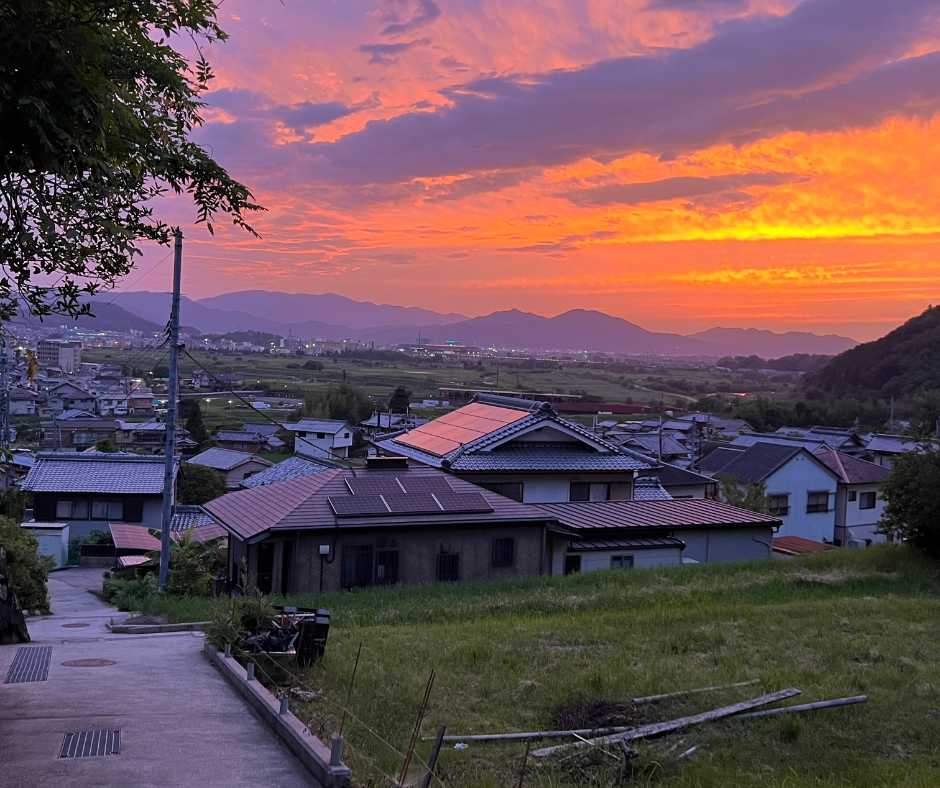


Day 3: Slow Recovery
I woke up with a headache and a sore body, realising I must have hit myself somewhere when I fainted. I didn’t want to push myself too hard and cause more trouble, so when the staff asked how I was feeling, I honestly told him my head still hurt.
They were kind enough to adjust my schedule. I had breakfast early with them while everyone else was meditating. It was quick (done in 5 minutes) and without rules (no chanting or other dining etiquette applied) since we had to get the food ready for the other participants before they finished their group meditation. Afterward, I helped with doing dishes and sweeping the floor.
For samu, they assigned me some cushy indoor tasks. I ironed, folded laundry and made chopstick wrappers out of A4 paper while everyone else was out battling weeds and dirt in the scorching heat. Meanwhile, I was perfecting paper folding in the air-conditioned room. What a failure. Definitely not the Zen warrior I aspired to become!
The group meditation was always incredibly strict. The staff would tell you off if you breathed too loudly, moved even the slightest bit or if your throat dared to make a sound while swallowing. As soon as the bell rang to signal the end, you had to stand up and leave immediately. No stretching, no lingering! Everyone stumbled out of the hall, basically limping away because our legs were so numb from sitting still for so long. It was pretty intense but also kind of funny to watch us all trying to walk like newborn deer with all our might.
In the afternoon, we had a really long break and were allowed to go outside. I went sightseeing in Arashiyama with a couple of fellow participants. We visited the famous bamboo grove, crossed Togetsukyo Bridge and had soft-serve matcha ice cream at a café. Having that kind of break felt like such a luxury!
We took the the little tourist train (called Sagano Romantic Train) back, then had evening meditation in a dimly lit hall. The abbot came by the hall and started walking around us to do the traditional keisaku (the shoulder “encouragement” stick). I passed, since I was still recovering.
After dinner I showered and spent time chatting with the other participants over tea in the lounge. It was so much fun! I was finally starting to feel like part of the group.
Day 4: Practicing Mindfulness
It poured rain. Before the morning chanting, people leaving that day gave farewell greetings to the fellow participants. They each expressed their appreciation to the staff and the abbot and shared what they learned over their stay.
It was sad to see off the two girls I’d entered and became good friends with. Most people seemed to only stay for three nights. There were only about 24 participants at a time. By then only three women, including me, remained. I felt a little lonely!
Because of the rain, our samu was indoors. We repaired shoji screens, ironed kitchen cloths and folded paper towels. We also did shakyo (sutra copying). One of the long-term participants said it was actually their first time too since it’s only done on rainy days. A bit of a rare treat!
Lunch was served canteen-style: the abbot and staff loaded up our trays, we carried them into the dining hall, sat however we liked and ate in silence. It all felt way more relaxed than the rigid breakfast and dinner routines. But one rule still stood firm: no leftovers allowed.
This was a bit of a problem since my plate was basically a mountain of carbs — a sticky rice ball, udon noodle and even more rice. By this point, everyone else had already finished eating and we couldn’t start our lunch break until everyone was done.
So much pressure! I never thought I’d end up hating meal times this much! I just sat there staring at my plate with a sad, defeated face, wondering how I’d ever get through it. Then this kind, angelic uni student who was somehow way more composed than me (the so-called adult already failing monk life by day two), leaned over and whispered, “The rice ball’s wrapped. Just sneak it into your pocket.”
So I did. And we exchanged guilty grins.
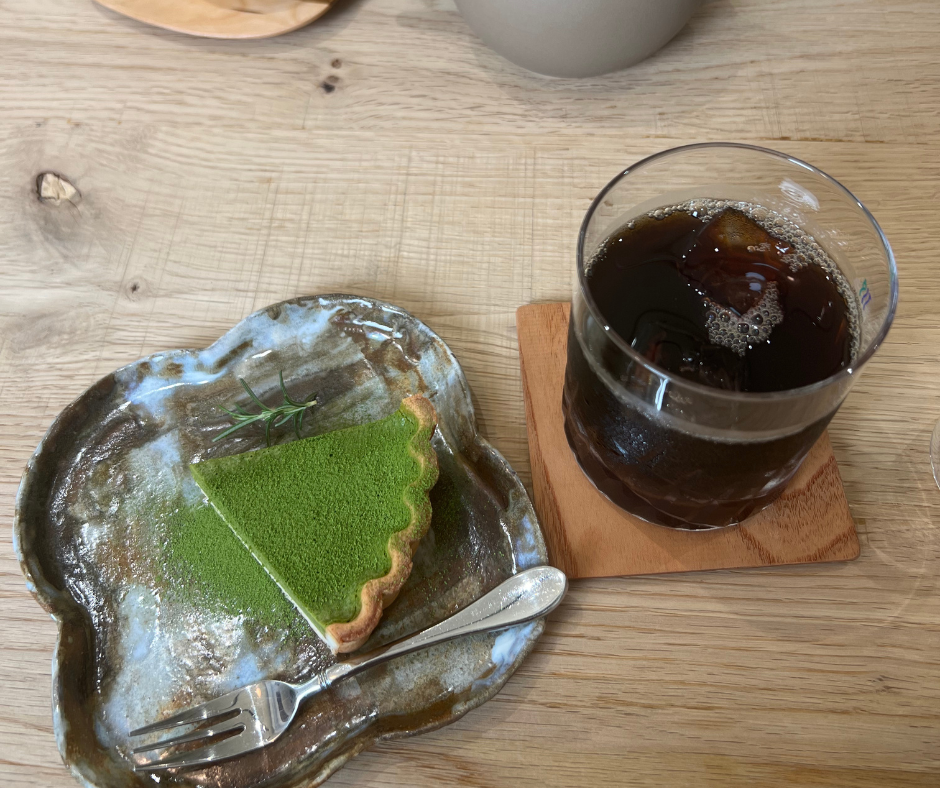
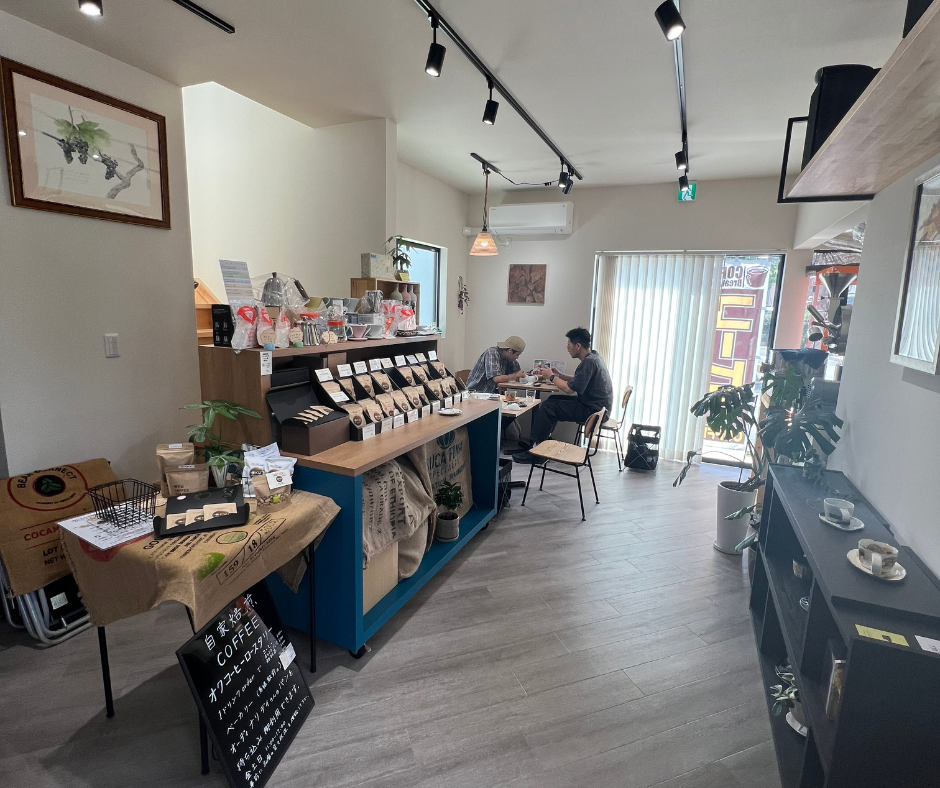
In the afternoon, I wandered out with that girl and found the sweetest little café near the temple. Who would’ve thought such a cute, stylish spot could be tucked away among ordinary houses in this quiet town?
In the evening, toward the end of the meditation session, a new group of people came in and introduced themselves. Their voices all cracked with nerves and I felt this unexpected wave of affection for them. It took me right back to my own first day.
In my head I was sort of talking to them: “We might all look so serious sitting here, but honestly, everyone’s actually really kind. You’ll be okay.”
Day 5: Who Comes to a Zen Temple?
It really struck me how many different kinds of people came here.
There were people who showed up regularly just to shake off lazy habits and bring some discipline back into their lives. Some were between jobs and wanted to do something meaningful before starting a new chapter. A few were dealing with career burnout, hoping to find some answers.
There was one guy struggling with mental health issues and because of that, his sleep schedule was totally flipped. He told me he was awake all night, sleeping all day and was here trying to push himself toward healthier routines.
And then there was this girl who told us she used to be a resident staff member for a few years back when she was a teenager.
I was surprised to find out quite a few people were sent here by their employers. One guy told me that at his company, all new employees had to attend this training as part of their orientation. I also met someone who was there because HR decided that he needed help with his “lack of leadership skills” , which we both thought was kind of hilarious, considering the main thing you learn here is how to follow orders without question.
And then there were others who, like me, were simply searching for something they couldn’t quite name.
What amazed me the most was how openly we all shared our struggles. Everyone listened to each other with so much care. It’s so rare to find people you can talk to about the big questions in life — our ikigai, the meaning of it all, our purpose and pain — without feeling weird or being judged.
I think that’s part of why I’m drawn to try things like this in the first place. To find my tribe. To meet people willing to share their deepest desires, pains and dreams without labeling you as that socially awkward girl who thinks too much.
Just being in a space like that was incredibly healing. It was really comforting to know that I’m not the only one bearing the heaviness that life sometimes brings.
Day 6: Saying Goodbye
When it was finally my turn to say goodbye, I felt a bittersweet mix of relief and sadness.
Walking out of the temple gates for the last time, I didn’t leave with any grand enlightenment but with something that might be even more precious. A sense of community. The feeling that life doesn’t have to be carried alone and that there’s a kind of courage in simply showing up, sharing your struggles and being human together.
Summary
It wasn’t always easy dealing with the heat, my fainting spell and the anxiety about messing up rituals. But there was also moments of real peace and the gift of seeing how strangers come together to lift one another up and find a little more happiness, whatever that might look like.
Would I do it again? Honestly, I’m not sure at this stage. But it was a powerful learning experience and I’m truly glad I did it.

 Sound of Mettā
Leave a reply to alice Cancel reply