
Note: This post is a personal reflection on my experience attending a 10-day Vipassana course. If you’re looking for practical information (the course rule, application process etc.), or want to know more about the Dhamma Aloka center and its facility, check out this post.
- Why Did I Attend 10 Days Vipassana Course?
- What is Vipasanna (As Taught by SN Goekna)?
- Course Itinerary and Timetable
- Arriving at the Centre
- Day 1: A Spoonful of Optimism, a Pinch of Panic
- Day 2 & 3: Follow the instruction
- Day 4: Vipassana Begins
- Day 5: I Am Not My Mind
- Day 6: Finding My Rhythm
- Day 7: What is Happening to My Face?!!
- Day 8: The Craze Continues
- Day 9: Smile, My Love
- Day 10: End of Noble Silence
- Day 11: Back to Reality
- Was Vipassana Worth It?
Why Did I Attend 10 Days Vipassana Course?
Would you voluntarily imprison yourself to do nothing but meditate for 100 hours, in complete silence – all while following a strict schedule starting from 4am for 10 days? When a friend recommended me the Vipassana course two years ago, I thought it sounded absolutely insane.

But then my 30s arrived and so did an existential crisis. I took my unpaid leave and flew back to Japan on a whim, after living in Australia for over a decade. For over a year, I kept drifting between these two countries, unsure of what I wanted or where I belonged. I kept thinking ‘I don’t want to be here’ , regardless of where I was. I grew up in really traditional Japanese household and used to be so sure of my identify. Years on, I became a person who is culturally homeless, not belonging here nor there. I felt so insecure and scared of who I was becoming.
As my inner world unraveled, I found myself returning to my Buddhist roots and turning to meditation just to cope. Even with just an hour a day, I began to notice real benefits.
And then, strangely, Vipassana also started appearing everywhere: in the biography of a poet I’d just discovered, in a conversation with a hiker in Yakushima, in a podcast I stumbled across. Slowly, my curiosity began to grow.
I really felt like I needed to get myself together. So a week after I returned to Australia from yet another trip to Japan, I signed up for the course at Dhamma Aloka located on the outskirts of Melbourne, Australia, hoping to clear my head and figure out my next move.
What is Vipasanna (As Taught by SN Goekna)?
A man said to the Buddha, “I want Happiness.”
Buddha said, first remove “I”, that’s ego,
then remove “want”, that’s desire.
See now you are left with only Happiness.
— a popular modern saying that reflects on Buddha’s idea, origin unknown
Craving, Aversion, Equanimity, Anicca…you’ll hear these words so many times over the ten days, they’ll be etched into your brain.
The core premise of Vipassana is that all mental suffering arises from craving (wanting pleasant experiences to arise or stay) and aversion (wanting unpleasant experiences to go away). According to this view, freedom from suffering comes through the practice of equanimity: the ability to observe all experiences just as they are, without reacting with craving or aversion.
So how do we practice this so-called equanimity?
By understanding the truth that everything arises and passes away and nothing lasts forever. In Buddhism, this truth is known as Anicca or impermanence.
Goenka emphasizes that equanimity must be understood not only intellectually but experientially. And in Vipassana, this experiential understanding comes from observing the physical sensations in your body without reacting to them. Whether it’s a pleasant tingling or intense pain in your leg, the practice is to simply observe it come and go, without resisting or clinging to it.
Course Itinerary and Timetable
Here is brief itinerary of the ten day course. More detailed information is available on this post.
Itinerary
Day 0: Arrival Day
- Arrive in the afternoon (no later than 3pm)
- Registration, orientation, handing in valuables and dinner
- Precepts and noble silence begin at 4pm
Days 1–9: Full Course Days
- Full schedule of meditation and an evening discourse (4am – 9pm)
- You will learn three meditation techniques over 10 days, including Anapana (Day 1 – 3) Vipasanna (Day 4 – 9) and Metta (Day 10)
Day 10: Mettā Day (Loving-kindness Meditation)
- Morning meditation and a group metta session
- Noble silence ends after morning instructions
- Final evening discourse and group meditation
Day 11: Departure Day
- Group meditation in the morning
- Followed by breakfast and cleaning
- Departure, usually by 11 – 4pm (finish time varies depending on the voluntary cleaning duties you choose to help with)
Timetable
| 4 am | Morning wake-up gong |
| 4:30-6:30 am | Meditate in the hall or in your room |
| 6:30-8:00 am | Breakfast break |
| 8:00-9:00 am | Group meditation in the hall |
| 9:00-11:00 am | Meditate in the hall or in your room according to the teacher’s instructions |
| 11:00-12:00 noon | Lunch break |
| 12:00-1:00 pm | Rest and interviews with the teacher (if you have any questions) |
| 1:00-2:30 pm | Meditate in the hall or in your room |
| 2:30-3:30 pm | Group meditation in the hall |
| 3:30-5:00 pm | Meditate in the hall or in own room according to the teacher’s instructions |
| 5:00-6:00 pm | Tea break |
| 6:00-7:00 pm | Group meditation in the hall |
| 7:00-8:15 pm | Discourse in the hall |
| 8:15-9:00 pm | Group meditation in the hall |
| 9:00-9:30 pm | Question time in the hall |
| 9:30 pm | Lights out |
Arriving at the Centre

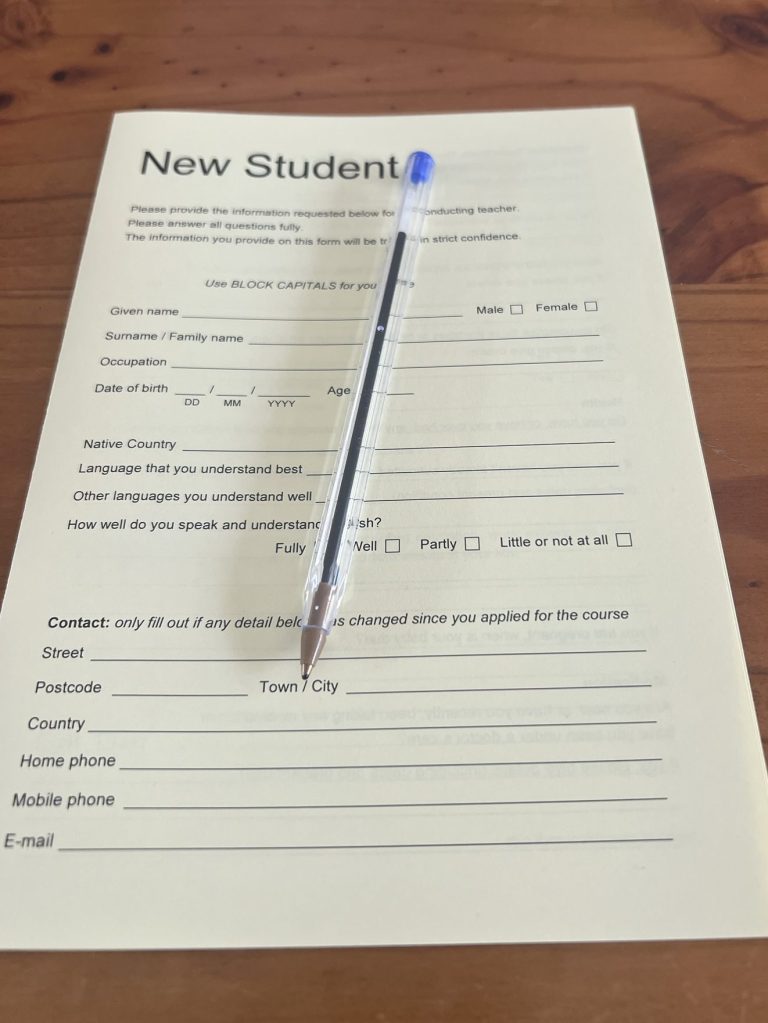
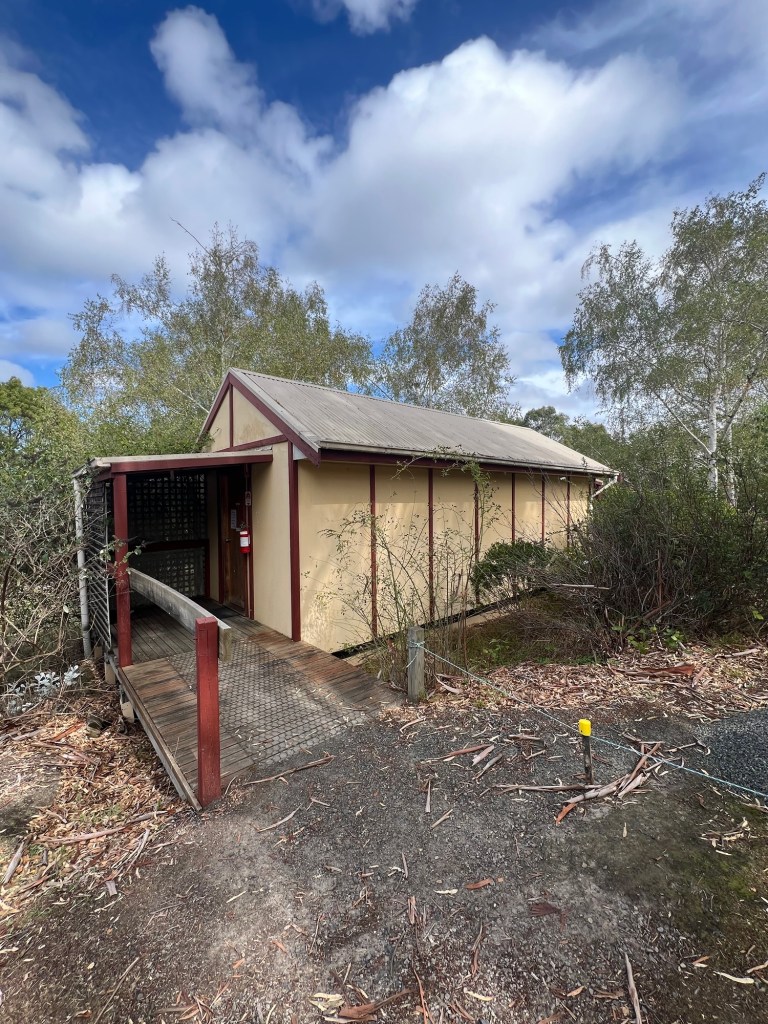
I was one of the first students to arrive, just after 2:30pm. Upon arrival, I completed the registration form and handed in my valuables and other prohibited items, including my phone.
Not long after, more people began to arrive. We naturally gathered around a single dining table, pulling up chairs, making space. The room was quickly filled with excited chatter as strangers bond over shared curiosity and nervous energy, vaguely aware that this would be our last conversation for a while.
When I told my friends I was going to do the course, most of them sounded a little concerned. They half-jokingly asked “Aren’t the people there going to be a bit… woo-woo?” And I thought, who cares if anyone was woo-woo, cuckoo or poo-poo? Aren’t we all, just a little? Besides, we can’t interact with each other during the course anyway. That said, everyone I met were very kind and genuine.
Once everyone had arrived, the centre manager explained the course rules and expectations. We were then guided to the meditation hall. One by one, our names were read aloud as we were assigned a meditation cushion. It almost felt like a military roll call. The friendly warmth from earlier were quickly replaced with a strict formality.
Then the room darkened slightly as a video flickered to life. Goenka’s voice filling the space as he officially announced the beginning of noble silence.
Here I go. Time to surrender myself to the unknown.
Day 1: A Spoonful of Optimism, a Pinch of Panic
When the gong woke me at 4 a.m., I actually felt great and proud of myself for being here. I headed to the meditation hall and sat quietly, feeling a surprising sense of peace and joy.
Every meditation session ends with the pre-recorded chants of sutta (scripture of the oral teachings of Gautama Buddha) in Pali or original dohas (rhymed couplets) in Hindi by Goenka. And most of time it ends with him chanting a Pali phrase ‘Bhavatu sabbamaṅgalaṁ’ (meaning, may all beings be blessed).
When I first heard his chanting, I felt it sounded a little strange, especially when he elongates some words. It’s an…acquired taste. But as the day progressed, hearing his chant became happy moments for me, as it signals the ending of each meditation session!
For breakfast I opted for a bowl of warm oats with stewed plums. So delicious! It was so good that I was making a mental note to ask for the recipe after the course (tip: you get access to a PDF with all the recipes from the 10 days once the course ends!).
Honestly, everything I ate during the course was great. Part of me could have stayed just for the love of eating their food (and no cooking, no dishes, no cleaning, no grocery shopping… bliss.)
I also found myself loving the noble silence. Goenka explains that one of the reasons for staying silent is to avoid saying anything untrue. As soon as we speak, we might start pretending. We might act excited talking about the weather or exaggerate what we felt during meditation. Sometimes we say we’re fine when we’re really not. As a perpetuate people pleaser, this experience was refreshingly freeing. I didn’t have to pretend to be happy. I could just be quietly grumpy, anxious or whatever I was, without needing to perform.
In the afternoon, after the group meditation, the Assistant Teacher called my name along with three other women. She asked if we understood the instructions given so far. Then she invited us to meditate together. As I sat in silence, a strange feeling came over me. I felt a warm, loving sensation in my chest. It felt so nice. I remember wondering what it was at the time, not knowing that by the end of the course, it would all make sense.
It was all going so well….until the evening discourse where Goenka said, “Now the course has begun. You cannot leave for the next ten days.”
And just like that, my heart started pounding. Wait, What? I can’t leave?
Anxiety crept in. Suddenly, it felt as if I were here by force, not by choice.
Obviously, I knew I couldn’t leave if I wanted to complete the course (that’s the whole point!) But something about hearing it said out loud, so definitively, triggered something in me.
I had a flashback to a moment at a breathwork retreat in the middle of nowhere in Japan. I remembered the feeling so vividly: panic rising in my chest while being surrounded by nothing but rice fields, with no public transport, no car and no easy way out. I kept saying to my self ‘What have I gotten myself into?‘
That same fear began to stir again. And I was worried for myself.

So I stayed back in the hall after the discourse and spoke with the Assistant Teacher. I told her I was feeling a little anxious, that my heart was racing and asked if there was something I could do to calm my nerve.
She gently asked if I had any history of mental health conditions. After I assured her that what I was experiencing felt situational, she offered some advice: try shifting your focus from emotion to sensation. Don’t indulge your mind in the spiral of “Oh no, I’m anxious, I feel trapped.” Instead, bring your attention to the breath. Am I breathing fast or slow? Shallow or deep? No need to change anything, just observe.
I understood what she meant, but honestly, it didn’t help me much in the moment. Still, I decided not to take it too seriously. I told myself I’d sleep on it and see how I felt in the morning.
Day 2 & 3: Follow the Instruction
All you need to do is follow the instructions: Sit down, shut up, watch, and don’t get involved. Gradually, the meditation experience will open up all by itself.
— Ajahn Brahm
Luckily, by the next morning, the anxiety had lifted. I felt motivated to keep going.
Days 1 to 3 were dedicated to practicing Anapana. In this technique, you’re asked to focus all your attention on the sensations of breath as it passes in and out of the small area just below the nostrils and above the upper lip.
To my surprise, Anapana came quite naturally to me. I had tried many forms of meditation before, including guided audio meditations, Vedic mantra practice, Zazen, Tibetan visualization techniques, but none of them had ever really clicked.
With Anapana, I was able to focus almost immediately. I could feel the subtle tingling sensations of air brushing just beneath my nose; the warmth as I exhaled and the coolness as I inhaled. The simplicity of the instructions made it surprisingly easy to stay present.
On the morning of Day 3, something magical happened. I became hyper-focused on the sensations around my nostrils, completely absorbed in the breath. Then, out of blue, I noticed that I couldn’t feel the rest of my body at all. It was as if the boundaries of my body had dissolved. I couldn’t tell where I ended and the stillness around me began. It felt so comforting and safe like becoming one with the quiet darkness.
I wondered: Is it okay to just rest in this feeling? To simply be aware of it and enjoy it?
That afternoon, I signed up for a one-on-one interview with the assistant teacher. I explained that while observing the breath, I’d felt this beautiful sensation and asked, “Is it okay to just be in the moment and enjoy it?”
She looked at me, a bit puzzled, and gently said, “What do you mean by enjoy it? No. Just follow the instructions.”
That’s when it hit me: I’d been self-indulgent, missing the essence of what we were being taught—observe without craving, without aversion. Even with a pleasurable sensation, the instruction was the same: remain equanimous. Neither cling to it nor push it away.
I felt humbled. And I reminded myself: Work seriously. Follow the instructions.
At the evening discourse, we were told that we will begin practicing Vipassana. I was excited to finally learn the technique!
Day 4: Vipassana Begins
In the afternoon, we began the actual Vipassana practice. We were instructed to expand our awareness beyond the small area beneath the nostrils to sensations throughout the entire body.
This was done by slowly scanning each part of the body, from head to toe, part by part. We notice whatever arises from an itchy eye to tingling lips, a throbbing knee or even the sheer absence of any sensation. The instruction was simple: observe all of it with equanimity. Just notice what’s there (or not there) and move on to the next part.
It was so simple yet difficult to follow. It was hard to pay attention to the sensation on the top of my head when my leg was screaming with pain!
Day 4 was also when things got more serious. We were introduced to the “hour of strong determination,” which happen three times a day. During these sittings, you’re not supposed to move a single inch of your body. No shifting, no scratching, no adjusting.
For some reason, I misinterpreted this to mean that all meditation sessions were meant to be done in complete stillness. (Didn’t this girl just promise to follow the instructions yesterday?) Somehow, I managed to push through most of them that way. Little did I know just how much I was going to suffer because of it the next day.
Day 5: I Am Not My Mind
I was both physically and mentally exhausted from voluntarily doing hours of strong determination for 10 hours on Day 4. I struggled to stay focus even for five minute.
Every session felt like forever and I just kept waiting for Goenka to start chanting and hear that magical words Bhavatu sabbamaṅgalaṁ.
Every time he paused to take a breath, I thought to myself: ‘Aaand here comes ‘Bhavatu sabbamaṅgalaṁ’ and got defeated when he continued to chant. And I kept thinking ‘OMGGGG Pleaaaase. Just say it! Bhavatu sabbamaṅgalaṁ! Let’s go! Nothing doing!!
I found it much more challenging to bring my focus with Vipassana compared to Anapana. I tried keeping my attention on sensations in my body but without even realizing, my mind had already wandered. What’s for lunch? Surely one hour has passed already? Did I lock the door before I leave the house?
I started to see that my mind isn’t a reliable place to seek advice. While meditating, it churns out endless chains of thoughts that are contradictory, incoherent and often completely random. If my mind appeared as a person standing in front of me saying all these things aloud, I’d probably think she is totally crazy.
And yet, we trust our minds so easily. We follow every thought, get caught in spirals of overthinking and self-blame, without ever questioning the source.
Day 6: Finding My Rhythm
By Day 6, I started to notice when my mind is more focused. I found this useful not just for meditation but for real life too. I began to discover my own rhythm: times when I could concentrate more easily and times when my mind felt more scattered.
For me, I was most focused on 4:30-6:30 am session and least focused on 1:00-2:30 pm. I was very sleepy after meals!
I promised to myself I will do better today. As I start scanning my body part by part, I started feeling stabbing pains in my leg. But I was determined not to move. I kept telling myself to be equanimous and keep moving. But my mind won’t let go. I keep thinking ‘but my leg’ ‘I’m in pain’ and sure enough, that thought arise again. ‘I don’t wanna be here’. And there comes long deep spiral of negative thoughts. ‘I don’t want to be in Australia’ ‘But you were not happy in Japan’ ‘What do I want?’ ‘Why can’t I decide?’ ‘I want to be somewhere else’
And I keep telling myself to just observe the things as they are, not as I want them to be. But I couldn’t help myself from getting frustrated, questioning the whole Vipassana concept. How can equanimity be good? I like feeling good sensation and I don’t like pain. Isn’t it a good thing? To know what I like and what I don’t like? If I don’t care about these things, I will be completely disassociated from this world, living like a soulless vegetable!
Day 7: What is Happening to My Face?!!
I started getting used to the routine. I swiftly sat on cushion in cross legged position, meditating away.
Then in the evening, something weird started to happen. I lost control of my neck and facial muscle. As I was sitting still, all the sudden, my neck was twisted by 90 degree. And my face kept twitching and making all sorts of expression. I felt like I was becoming Jim Carrey character from Liar Liar!
I tried not to move but they just start twitching so aggressively and unexpectedly. Needless to say I could not pay attention to any sensations at all for the whole evening.
Day 8: The Craze Continues
The twitching on my face and neck were still persistent all day. I could focus for 10 mins or so and completely got distracted by neck aggressively turning left and right, my face making weird angry faces one minutes and aggressively stretching tongues out next.
I was a little scared but overall very curious about what is going on with my neck and face. The long day fighting with my own facial muscle finally ends with the evening discourse.
In the video, Goenka advised that as we are now getting hang of feeling sensation while meditating, try to apply the technique to other activities throughout the day. When you are walking, try feeling sensation of the foot touching the ground. When eating, try focusing on the sensation of warmth as you put food in your mouth. I make a mental note to be mindful of this tomorrow.
Day 9: Smile, My Love
The twitching on my face and neck were still constant in the morning but strangely my mind was at peace. I’m really enjoying the course and start feeling sad that it was approaching towards the end.
I followed Goenka’s advice and tried to notice body sensations during daily activities. After lunch, I went for a walk while being mindful of how the wind hit my skin, and the pressure on my foot as I took a step forward. And again, my face start twitching. I decided to just observe the movement instead of trying to control it.
And then, something unexpected happened. My face, without meaning to, broke into the biggest smile, stretching wide and full, showing every tooth. In that moment, I felt a voice rise from deep inside me, saying:
“My love, smile. I don’t want you to be so sad anymore.’
And there, alone among the trees, I cried in silence.
For years, I carried a deep sadness and shame. I often found myself spiraling into self-loathing, living as if I didn’t deserve to be happy. I felt weighed down by guilt for hurting and disappointing those around me and for longing for a sense of home that no longer existed.
When I learned that my workplace offered the option to take 12 months of unpaid leave, I clung to the hope that one day I could use that time to reconnect with my family and my country. One of my biggest dreams was to travel through Japan and abroad with my mother, treating her to beautiful hotels, special meals and experiences she never had the chance to enjoy. I wanted to give back and show her I had built a good life overseas.
But the reality was very different when I finally returned home. I hadn’t come home to give. I had come seeking help. I arrived not with pride but with desperation, hoping Japan could somehow fill my void.
But my ego and fear held me back from taking any practical steps toward building a life there. I felt guilty for leaving behind my life in Australia and for all the people waiting for me. I was scared that those back home might treat me differently because I’d been abroad for so long. And yet, my ego wouldn’t let me be humble enough to truly start over to rebuild my life from scratch at this age.
I felt like I had failed, not only in life abroad but even in the one place I thought would make me whole. Instead of feeling fulfilled, I felt small. I was deeply disappointed in myself.
For years, I blamed myself for being ungrateful for wanting more connection to my culture while I was having a good life abroad. My mind became filled with sadness and harsh words toward myself.
And yet, beneath all the pain, wishing I were better, wishing things were different, the deepest part of me had simply wanted to be kind and happy. I only wanted to be kind to others and not cause them harm but never seeing how deeply I was hurting in the process.
I often wondered how some monks could have such deep compassion for all beings, no matter what they had done. I always felt uneasy when monks I respected said they held the same compassion for both victims of the most heinous crimes and those who committed them.
Hearing or reading this, I couldn’t understand how they could feel that way. I even judged them a little.
But in that moment, I felt I could begin to understand them. Though I’m still far from being able to extend compassion to all. No matter what we say or do, at the deepest level of our minds, there is consciousness. And that part has always remained pure and beautiful.
Touching that depth of compassion for myself and others was the most wondrous feeling I have ever known.
Day 10: End of Noble Silence
I woke up with odd sense of calmness and peace. To my surprise, the constant twitching of my neck and face seemed to have disappeared.
During the morning group meditation, we learned a new technique called Metta Bhavana, which is a practice for cultivating loving-kindness. Over the course of nine days, we received the blessings of Dhamma. We experienced both the joy of pleasant sensations and the challenges of physical and mental pain. We came to understand that everyone experiences both pleasure and suffering. With this understanding, it becomes our time to share love and compassion by sincerely wishing that all beings be free from suffering and find happiness.
After spending days meditating, practicing Metta Bhavana was so easy. It is amazing to realise how much pure and selfless compassion we have for others, beyond our personal desires and dislikes. As I listened to Goenka’s chanting, tears streamed down my face, even though I didn’t understand the words. Afterward, I lingered in the hall with a few others, quietly enjoying the last moments of peace.
When I finally left the hall, I saw a large sign announcing that Noble Silence was lifted. People gathered in the common area, filling the space with excited chatter. I was feeling sad that the noble silence was over and felt overwhelmed by the noise. I just could not bring myself to talking. So I returned to the hall and chose to sit just outside, seeking a quiet refuge. One of the girls found me and we shared a smile before sitting together in silence.
In the final evening discourse, Goenka explained that when we were called forward to meditate in small groups with the Assistant Teacher, she was always practicing Metta Bhavana. Then I understood the warm sensation I felt in my heart on Day 1 during that meditation. I had been receiving her love and kindness.
Day 11: Back to Reality
Although we didn’t speak a word for 10 days, it was so easy to feel connected. We were united by the shared joy of making it to the end! I made a few friends I still see today. Friends I can casually meet for coffee and talk about the deeper, non-material side of life.
We shared our last breakfast together, exchanging conversations, before moving on to volunteer for cleaning duties. I chose to help in the kitchen, and it was my first time seeing the hard work the kitchen staff had been doing for the past 10 days. It gave me a whole new appreciation for the servers who cared for us, allowing me to focus fully on my meditation practice.
After saying final goodbyes to my fellow “survivors,” I left the center and head to my favourite Airbnb place to reconnect with the everyday life.
Was Vipassana Worth It?
Would I do it again? Absolutely. Vipassana was, without a doubt, a valuable experience for me.
However, there were parts of the course that made me uncomfortable, enough that I’d be cautious about recommending it to everyone without context. (I’ve written more about that in another post.)
But overall, I’m deeply grateful to the centre for offering such a rare opportunity to turn inward and discover a kind of mental strength I didn’t know I had. The experience also helped me grow in compassion, both for myself and for others. It sparked a genuine desire to support people in my community. In many ways, I realised that this sense of connection and purpose was what I’d been missing all along… the very thing behind my lingering feeling of ‘homelessness.’ And for that alone, I know it was worth every moment.
Was I enlightened? Of course not. Ten days isn’t enough to solve life’s biggest questions. But I remember something a Zen monk once told me:
“The moment you work on yourself by meditating, learning, showing up, that is always the moment of liberation. You become free, in that very moment. You have already arrived. So there’s no need to chase enlightenment”
I carry his teaching with me to this day and I brought those words with me into Vipassana. Every time I sat on that cushion, trying to practice equanimity, that was the moment of liberation. I had already arrived, again and again, each time I showed up to practice.
After all, chasing the idea of enlightenment is, in itself, another form of craving.
It wasn’t easy, but it was totally worth the effort!
 Sound of Mettā
Leave a comment