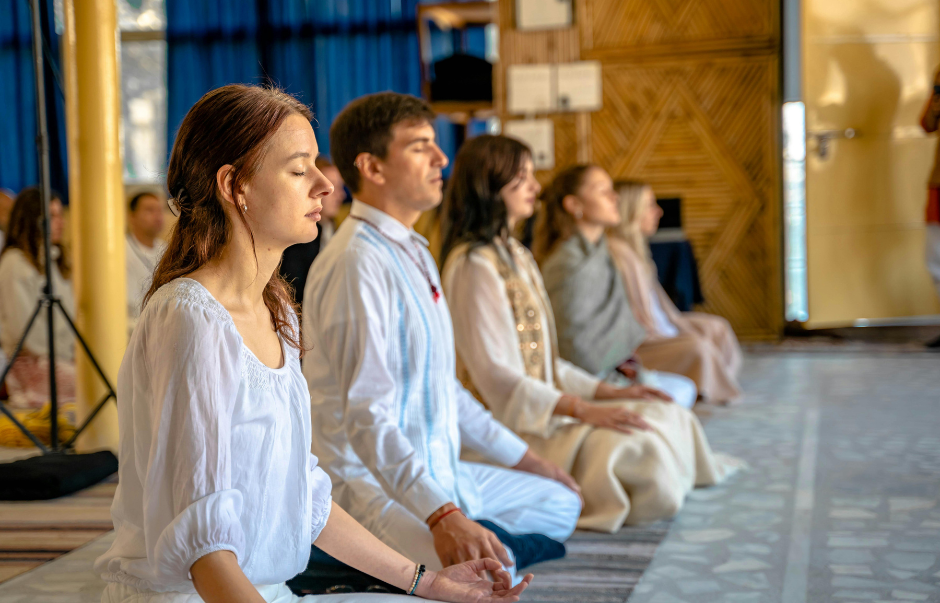
Note: This post shares practical information about the 10-Day Vipassana Meditation Course by S.N. Goenka, including details about the Dhamma Aloka Centre and its facilities. If you’re interested in a more personal perspective, you can read my reflection on attending the course.
- What is Vipassana Meditation?
- Brief History of the Burmese Vipassana Movement
- Where Can I Learn Vipassana?
- How To Apply
- How Much Does the Course Cost?
- What Kind of Meditation Will I Learn at a Goenka Centre?
- Course Overview
- Course Rules
- About Dhamma Aloka
- What Should I Bring?
- Is Vipassana For Me?
- What Do I Get Out of Vipassana?
- Should I Do Vipassana? Important Points to Consider
- Here to Learn Meditation? Perfect. Wanna Shoot Starts From Your Head? Probably Not the Place.
- No Mental Health Professional On Site
- Eastern vs Western Philosophy: Two Ways of Seeing the Self
- Us vs Them Mindset
- You Can Leave. But It’s Not Always Easy!
- Trust the Process (Or Else)?
- It’s Not Buddhism (or Is It?)
- Is Vipassana Worth It?
- FAQ
- Still Interested?
What is Vipassana Meditation?
Vipassana means “to see things as they really are.” It is a meditation practice rooted in Theravāda, the oldest surviving school of thought in Buddhism. In English, it is often translated as “insight meditation.”
It was taught as a practical method to understand the nature of the mind and body, leading to liberation from all mental suffering.
Brief History of the Burmese Vipassana Movement
In the late 1800s, in Burma (now Myanmar), Buddhism was under pressure during British colonial rule.
Some monks worried that the practices of meditation might be lost and began reviving and sharing them with laypeople. Over time, their efforts became a movement that eventually spread far beyond Burma.
Where Can I Learn Vipassana?
Today, some of well-known modern traditions of Vipassana include:
The Mahāsi method: uses the technique called noting, where practitioners label their experiences moment by moment.
The Goenka method: uses body scanning to cultivate awareness of bodily sensations with equanimity.
Each method has its own emphasis and technique, but the heart of Vipassana remains the same: observing reality as it is, with awareness and non-reactivity.
Goenka centres are active across all six states while there is currently no Mahāsi centers in Australia.
I’ve also found that many centres in Australia describe themselves as offering “insight meditation.” These centres may draw on various traditions. Some explicitly mention following Mahasi Sayadaw’s lineage, while others do not specify their background. Because teaching styles and lineages can vary, it’s a good idea to check each centre’s website or contact them directly to learn more about their specific approach.
Because I haven’t personally attended courses at these centres, I can’t say how closely they align with Mahasi, Goenka or other established roots. Hence, I have decided not to include any of these centres here. But do check for yourself!
There seems to be often a misconception amongst Goenka’s method practitioners that Vipassana is solely associated with his tradition. I think it’s worth noting that there are actually a number of methods and centres where you can learn Vipassana.
Check out below if you want to learn more about Vipassana taught at Goenka’s centers.
How To Apply
You can check the course dates and apply on the Dhamma Aloka website. If you are interested in taking a course in other states or overseas, check out worldwide course locations and their schedules.
Applications typically open about 2 months before the course starts. I recommend applying as soon as possible, because the courses on popular locations fill up very quickly. If the course is already full, you can join the waitlist. The website will show you if the waitlist is short or long for each course.
How Much Does the Course Cost?
There is no charge to attend the course. S.N. Goenka’s Vipassana Courses are run solely on a donation basis. As a new student, you may give a donation (card or cash) on the last day of the course or any time thereafter.
What Kind of Meditation Will I Learn at a Goenka Centre?
At a Goenka Vipassana centre, you’ll learn three main practices taught in a carefully structured sequence over the 10-day course.
Anapana
For the first three days, you will practice Anapana. In this technique, you focus all your attention on the sensations of breath as it passes in and out of the small area just below the nostrils and above the upper lip. This practice sharpens your concentration, preparing you for the deeper work of Vipassana later in the course.
Vipassana
Starting on the fourth day, you will be introduced to Vipassana, the core practice of the course. This involves systematically scanning your body, part by part and observing the sensations present at each spot. Whether it’s pain in your leg or a pleasant buzzing in your chest, you observe all sensations calmly without pushing away uncomfortable feelings or holding on to the nice ones.
Your role is simply to notice how all sensations arise and eventually pass away. Over time, this work cultivates insight into the three universal characteristics: impermanence (anicca), suffering (dukkha), and non-self (anatta).
Metta
At the end of the course, you’ll practice Metta Bhavana, the cultivation of loving-kindness. In this practice, you learn to send out love and compassion toward yourself and all beings, wishing that everyone may be free from suffering and find true peace and happiness.
Course Overview
Itinerary
Day 0: Arrival Day
- Arrive in the afternoon
- Registration, orientation, handing in valuables and dinner
- Noble silence begins in the evening
Days 1–9: Full Course Days
- Full schedule of meditation and an evening discourse
- You will learn three meditation techniques over 10 days, including Anapana (Day 1 – 3) Vipasanna (Day 4 – 9) and Metta (Day 10)
Day 10: Mettā Day (Loving-kindness Meditation)
- Morning meditation and a group metta session
- Noble silence ends after morning instructions
- Final evening discourse and group meditation
Day 11: Leave
- Breakfast
- You are encouraged to volunteer for various roles (e.g. laundry, cleaning dining, kitchen or bathroom)
- Departure time depends on the volunteer role you undertake.
Timetable
| 4 am | Morning wake-up gong |
| 4:30-6:30 am | Meditate in the hall or in your room |
| 6:30-8:00 am | Breakfast break |
| 8:00-9:00 am | Group meditation in the hall |
| 9:00-11:00 am | Meditate in the hall or in your room according to the teacher’s instructions |
| 11:00-12:00 noon | Lunch break |
| 12:00-1:00 pm | Rest and interviews with the teacher (if you have any questions) |
| 1:00-2:30 pm | Meditate in the hall or in your room |
| 2:30-3:30 pm | Group meditation in the hall |
| 3:30-5:00 pm | Meditate in the hall or in own room according to the teacher’s instructions |
| 5:00-6:00 pm | Tea break |
| 6:00-7:00 pm | Group meditation in the hall |
| 7:00-8:15 pm | Discourse in the hall |
| 8:15-9:00 pm | Group meditation in the hall |
| 9:00-9:30 pm | Question time in the hall |
| 9:30 pm | Lights out |
Food
You will be served vegetarian breakfast and lunch. For dinner, new students can eat fresh fruits. Food is served in buffet style. Here is the menu for the course I attended in Dhamma Aloka. I’m pulling this out from my memory so it’s not going to be 100% accurate.
| Breakfast | Lunch |
|---|---|
| Oats Stewed prunes Brown rice Yoghurt Fresh Fruit Bread Condiments (Jams, Butter, Peanut Butter, etc.) Toppings (Sunflower, Sesame, Linseeds, Shredded coconuts) Milk (Cow and Vegan options) Two Herbal Teas (e.g. hibiscus, lemongrass, pepermint) English Tea and Coffee | Stir Fried Vegetables Salad Bar (beetroot; carrot; spinach) Vegetable Curry Fried noodles Marinated Tofu Desserts (dates; almond; sticky date slice) |
Course Rules
To clarify the spirit behind the discipline and rules, they may be summarized as follows:
Take great care that your actions do not disturb anyone. Take no notice of distractions caused by others.
Introduction to the Technique from Official Website
The Five Precepts
You are required to abstain from:
- killing any being;
- stealing;
- all sexual activity;
- telling lies;
- all intoxicants.
Other Notable Rules
You cannot:
- Talk (Noble silence)
- Make physical contact
- Read or write
- Exercise including yoga
- Pray or practice any other rituals
- Wear revealing clothes (e.g. shorts, leggings, sleeveless tops)
- Eat dinner (new students can eat fruits)
About Dhamma Aloka
Access
The Vipassana centre in Melbourne is called Dhamma Aloka. It’s located in Woori Yallock, about a 90-minute drive from the city, in a quiet part of the Yarra Valley.
The easiest way to get there is by car. If you don’t have a car, I recommend checking out the carpool page, which you’ll receive a link to after your application is accepted. On this page, you can either volunteer to give a ride or request one from various Melbourne suburbs.
Travel by public transports involve a train to the Lilydale Station and then the Warburton Bus 683, which goes through Woori Yallock.
Atmosphere
Before attending, I’d read a few blog posts and spoken with friends who had done Vipassana courses in various places. I’ll admit. I felt a little nervous after coming across some dramatic “escape stories” online.
But the atmosphere at the Melbourne centre felt more relaxed, perhaps because most participants are local residents. Many were also repeat participants of this particular centre and were very welcoming of new students.
Plus most people drove themselves to the centre, which created a subtle sense of freedom and agency, rather than the feeling of being completely cut off or “trapped in the middle of nowhere,” as some have described their experience at other centres.
How Many Students?
There were roughly 20 female students at the course I attended, of whom about 60% were new and 40% were returning students, often referred to as “old students” in Goenka’s Vipassana tradition.
Your Room
There are single rooms, three-person rooms, and a six-person dorm. From what I observed, single rooms are generally assigned by age, with older participants given priority. Each bed has a privacy curtain, like the ones you often see in hostel dorms. It has no air conditioning, but there is a fan and a heater in the room.
In most cases, you can’t request a single room or change your room unless you have a legitimate need. This is part of the practice of equanimity: learning to accept reality as it is, not as you want it to be.
I spoke with a woman who had worked as a centre manager several times.
She told me about a student who insisted on a single room because her roommate snored and she couldn’t focus on her meditation. Unfortunately, that’s not considered a valid reason as learning to navigate these kinds of challenges is part of the experience.
Shared facility
You will have access to a dining room, bathroom, laundry, meditation hall and outdoor garden area.
Dining Room
You’ll have an assigned seat, clearly labeled, where you’ll eat your meals for the entire 10 days. The dining room is only accessible during designated meal times.
While all taps at the centre provide drinking water, the hot water tank is located only in the dining room. (Well – technically, there’s another hot water tap in the laundry area, but it’s more lukewarm than hot.)
Bathroom
In the women’s area, there are three shared shower rooms, four toilets, and three sinks with mirrors.
Showers and laundry are only permitted during designated timeframes, which are posted on a sign in the bathroom. There are also a couple of shared hairdryers available.
Laundry
There’s a large basin, a couple of buckets, and detergent provided for hand-washing your clothes.
Since there’s only one basin, it can get a bit busy on warm, sunny days. That said, there’s plenty of space to hang everyone’s laundry, so drying isn’t usually a problem.
Meditation Hall
This is where you’ll spend the majority of your time each day.
Everyone is assigned a spot with a zabuton mat and a meditation cushion. In the foyer, there are extra blankets, cushions, and mats available but they’re first come, first served.
At the course I attended, all the extra cushions and mats were gone by Day 3. So it’s worth taking some early if you need additional support.
If you’re unable to sit on the floor for long periods, you can request a chair or a wooden floor chair with back support.
Outdoor Area
There is a small outdoor area where you can stretch your legs and walk. While the grounds aren’t large (it takes less than 10 minutes to walk around), they feel serene and peaceful.
What Should I Bring?
Here is items to bring to your 10 Days course at Dhamma Aloka.
- Bedding, including bed sheets, duvet, blankets or sleeping bag, pillow and pillow-case
- Modest, comfortable clothing that covers shoulders and knees.
- Slippers
- Toiletries (non scented)
- Towel
- A torch or headlight
- Alarm clock (I recommend a digital one, as the “tick-tock” sound of an analog clock can be distracting during meditation.)
- Water bottle
- Meditation cushions and shawls (cushions are provided, but you may bring your own if you prefer.)
Is Vipassana For Me?
Vipassana can be a transformative experience but like with everything else in life, it’s not for everyone. For many people, it’s physically challenging and emotionally intense. And while many people (myself included) find it profoundly meaningful, I believe it’s important to approach the experience with both sincerity and critical thinking.
Just as with any spiritual or wellness practices, discernment matters. It’s easy to romanticise these experiences and think that it works for everyone. However, we’re all wired differently, and what brings insight to one person might feel overwhelming or even harmful to someone else.
What Do I Get Out of Vipassana?
Official Answer
Their official website says Vipassana is:
- a technique that will eradicate suffering.
- a method of mental purification which allows one to face life’s tensions and problems in a calm, balanced way.
- an art of living that one can use to make positive contributions to society.
What I Personally Got Out of Vipassana
I won’t go into too much detail, but here are some of the benefits I experienced through the course:
- Stronger mind and body
- Healthier daily routine
- Improved concentration
- Digital and mental detox, thanks to the no-phone policy and noble silence
- A clearer understanding of the law of impermanence
- Deeper sense of compassion both for myself and for others
- A sense of accomplishment
- Greater ability to sit in meditation for longer periods
- Discovered the mental strength I didn’t know I had (a real confidence boost!)
If you are interested in reading more, check out my personal experience attending 10 days course.
Should I Do Vipassana? Important Points to Consider
Maybe you’re thinking of giving it a go, or if a friend or family member has mentioned the course and you’re concerned about their wellbeing. Here are some things I think might be helpful to consider.
Here to Learn Meditation? Perfect. Wanna Shoot Starts From Your Head? Probably Not the Place.
What I liked most is how methodical this course is. It gives you very clear, specific instructions that are easy to follow. It’s like a meditation bootcamp where you learn the technique in a well-structured way, so you can easily apply it once you leave. I found the course to be extremely practical.
But if you’re looking for a retreat where you can relax or have mystical experiences, this might not be the course for you. It’s primarily about training the mind through a disciplined technique.
It’s a place where you’ll be bringing yourself to sit still for about 10 hours a day, both day and night. You’re likely to experience some level of discomfort. Even if you do feel pleasant sensations, the point isn’t to chase them. The heart of the practice is developing equanimity by learning to meet all experiences, whether painful or pleasurable, in just the same way.
So if you happen to experience amazing sensations or feel like shooting stars are going off in your head, great! But great not because you’re having an extraordinary feeling. In the context of this course, it’s great because it gives you an opportunity to practice. Because soon enough, you’ll probably come back to reality, realise you’ve been sitting still for two hours and start noticing the pain creeping into your leg.
Can you welcome this pain without reacting to it? Can you let go of the amazing experiences, knowing that everything in life comes and goes? That’s the real challenge of Vipassana.
No Mental Health Professional On Site
The course is run completely by volunteers. There are no trained mental health practitioners on site.
The organisation clearly states that the course is not a substitute for medical or mental health treatment.
The teaching generally encourages you to observe any emotion or sensation without reacting or trying to change it. While this can be profoundly helpful for some, it may feel overwhelming for others, especially without the right kind of support.
Generally speaking you are responsible for your own wellbeing during the course.
Volunteers are kind and well-meaning but at the end of the day, they’re students just like you. The only difference is that they’ve done the course at least once before.
They are not trained to recognise or respond to signs of mental health crises. Unfortunately, in the past, this lack of professional oversight has contributed to serious outcomes at some of the centres.
I’m not saying Vipassana is terrible or that you shouldn’t try it. In fact, I had a truly meaningful experience. But I do think it’s still important to acknowledge that it’s not a one-size-fits-all approach and it may not be suitable for everyone at every stage of life.
Eastern vs Western Philosophy: Two Ways of Seeing the Self
Most of us grew up being told that knowing what you want is important. We have been taught that discovering our desires and preferences is important part of finding our identity.
But what if someone told you that wanting is exactly what makes you suffer? Or that the very idea of “you” as a separate, permanent being is an illusion?
In many modern societies (particularly in the West), we place a high value on individuality, on expressing our needs, defining who we are and returning to our “true selves.” We ask questions like, “Who were you before the world told you who to be?” and go on personal journeys to reclaim that identity.
In contrast, Buddhism teaches that clinging to desire is the root of suffering. It challenges the very idea of a permanent self because everything (including our sense of self) is constantly changing. True freedom, in this view, doesn’t come from becoming more of who we think we are, but from letting go: releasing the stories we tell ourselves, and loosening our grip on identity, desire and possessions. The question becomes: “Who might you become, when you’re no longer clinging to anything and only consciousness remains?”
It’s a noble path. But for those of us who are not monks or nuns, living in the modern, capitalistic world, being able to recognise and articulate our needs and emotions is still an important skill. We live in societies that expect us to define ourselves, to advocate for our preferences and to make choices based on what we want.
The aim of Vipassana is not to disassociate or adopt a “don’t care” attitude. It’s about developing equanimity by cultivating a calm, balanced mind so you can respond to life with greater clarity and compassion.
However, such nuances can be difficult to navigate, especially if you are currently working through patterns like emotional avoidance or people pleasing behaviour through therapy. Vipassana asks you to observe sensations without reacting, to let go of “I” and “mine,” while many Western therapeutic approaches focus on strengthening the sense of self and honoring your emotional experience.
When approached with care and discernment, the teachings of Vipassana can help us live more fully in the present moment, meeting life as it is, accepting ourselves just as we are and letting go of the torment that comes from wishing things were different. But when misunderstood, it can lead to a kind of detached indifference that masquerades as equanimity. Instead of cultivating compassion, this mistaken approach can make us emotionally unavailable, unsympathetic and disconnected from both ourselves and others, which runs counter to the heart of the practice.
Neither approach is right or wrong. They’re simply different. It’s something I took time to reflect on myself, and I think it’s worth thinking about, just to see if Vipassana is right for you, too.
Us vs Them Mindset
Some people treat S.N. Goenka’s teachings as dogma. His video discourses occasionally use languages like “those who leave early are weak minded”, which may be disheartening to hear if you’re struggling.
You Can Leave. But It’s Not Always Easy!
There’s an expectation that you will stay for the full 10 days.
In principle, everyone is there by free will. But at the same time, you cannot just run off because your valuables are with the centre manager (unless you decided not to hand them in on arrival).
During my stay, I saw someone leave partway through the course, and their request appeared to be handled without confrontation. Still, it’s worth noting that there are blogs written by numerous people about being refused when they asked to leave, suggesting that experiences may vary depending on the volunteer or the situation.
Some, like I Dream of Mangoes and Mariana Luna, shared stories of making multiple requests before being allowed to leave and have their belongings returned. If you’re not a naturally assertive person, navigating this kind of situation could feel stressful. And when you combine that barrier with the fact that volunteers are not trained mental health professionals (as mentioned earlier), it can potentially become risky for those who are in serious distress.
Trust the Process (Or Else)?
During the course, each evening ends with a recorded talk by Goenka. I found many of his talks insightful and engaging. He begins by encouraging students to question everything rather than blindly believe it, which helps build trust and suggests that the course respects your intelligence.
However, as the days go on, I observed certain patterns in his language beginning to emerge. He frequently repeats words like misery and suffering, implying them as universal problems with one simple solution: his technique.
By the end of the course, his tone becomes more absolute. He suggests that the technique has no flaws, that countless people have benefited, and that if you’re not experiencing results, it’s because you’re not applying it correctly.
While I did gain a lot from the course, I couldn’t help but feel uncomfortable as it seemed manipulative at times.
It’s Not Buddhism (or Is It?)
Goenka often emphasises that his Vipassana course is not part of any organised religion or sect. During the discourse he repetitively argues that it’s nothing to do with “Buddhism” . The teachings of Vipassana is not a matter of belief, but rather a universal law of nature.
This, couple with the fact that the course is free, makes the practice accessible to people of all faiths and economic backgrounds. Goenka played a major role in spreading Vipassana meditation globally, especially in the West, where secular approaches to mindfulness were just beginning to gain popularity.
Rituals and devotional elements are deliberately avoided in the course. There is no statues, altars or images of the Buddha to prevent what Goenka calls “blind devotion.” He emphasizes direct experience over faith, encouraging students to observe their own mind and body to discover truth for themselves.
Yet there’s a paradox here. While the Buddha is not visually present, Goenka himself becomes the dominant face of the course. His chanting plays all day, we watch nightly videos of him and at the end, there are books with his name on them. All of this happens while he speaks constantly of the Buddha’s teachings.
This gives me a sense that he presents himself not as part of the Buddhist tradition, but as the sole messenger of the Buddha’s “pure” teachings. It’s as if everyone else – other Buddhist teachers, monks or traditions – got it wrong and only his version is correct. That kind of exclusivity can feel misleading, even when the teachings themselves are full of wisdom. It also gives the impression that his method is the only correct way to practice Vipassana, when in reality, there are many valid and deeply rooted approaches to Vipassana across different Buddhist traditions.
The aim may be to keep the practice non-religious and inclusive, but I can see it can unintentionally create a kind of devotion to Goenka, even if not to Buddhism or the Buddha. And ironically, his strong refusal to associate the practice with Buddhism is what ultimately makes it feel a little cultish to me.
Of course, many Buddhist traditions do worship the Buddha as a deity. But to say Goenka’s teaching “is not Buddhism” still feels a bit off to me. After all, Vipassana meditation movement is often said to trace back to the monk Ledi Sayadaw, who is widely credited with making the practice more accessible to laypeople. Though Goenka’s own teacher, Sayagyi U Ba Khin, was a layman, the lineage and teachings themselves were clearly nurtured and preserved within a Buddhist context. To deny that this is nothing to do with Buddhism as a religion seems odd. It’s clearly shaped by Buddhist roots even if it wears more secular label today.
Is Vipassana Worth It?
Would I do it again? Absolutely. Would I recommend Vipassana? Not to everyone.
Personally, I found it quite blissful more like a retreat than a course or training. I felt very well looked after; there was no need to cook or clean, all you had to do was focus on your meditation. For me, it was a valuable opportunity to reconnect with myself. It really depends on your state of mind and what you want to get out of the retreat/course like this.
What I probably liked most about his course is how practical it is. It offers a very methodical and well-structured way to learn meditation. Instead of being told to simply “just relax” or to feel some kind of higher energy as you might at many other retreats, you’re given very clear, specific instructions that are easy to follow. For me, this made it a particularly effective way to learn meditation.
If you decide to give a go, great! And if you come to realise it’s not for you, that’s perfectly okay. At the same time, it’s equally important not to dismiss others who find value in it. Just because something isn’t your path, it doesn’t automatically mean those who walk it are blindly devoted. Because ultimately, we all just want to find what makes living a little easier to bear.
FAQ
Can I Take Shorter Course Instead?
No. 1-Day, 2-Day, and 3-Day courses are for old students only. If you’re new, you must complete the 10-day course first.
Do I Really Have to Stay Completely Silent?
Mostly, yes. You can’t talk to other students during the noble silence period.
You can talk to the course management if you need help with food, health, accommodation or any practical issue.
You can speak with the teacher if you have questions about the meditation technique. You can book a short one-on-one session during the lunch break or attend the evening Q&A.
How Strict Is the Daily Schedule?
There is a strict timetable from 4 a.m. to 9 p.m., but no one forces you to follow it.
There’s no attendance check and no one will come knocking if you skip a session or need a break. Some people choose to rest during meditation hours or quietly leave during the longer sittings.
That said, self-discipline is part of the practice. The more you stick to the schedule, the more you’ll get out of the course.
Do They Check My Bag For Prohibited Items?
No. There’s no bag check or confiscation. You’re expected to voluntarily hand in any prohibited items, such as phones, snacks, books or notebooks. Rooms do not have locks or safes. If you bring valuables, it’s a good idea to hand them in for safekeeping.
Still Interested?
If you’ve read this far, thank you!! If you wanna know how my 10 Days Vipassana Course went, please check out my other post, too :)
 Sound of Mettā
Leave a comment